Poetry Pop: A Fun and Creative Way to Enjoy Poetry
Introduction Poetry Pop
Poetry Pop is a new, joyful take on poetry. It combines a dash of creative expression, a sprinkle of emotion, short poetic stanzas, and easy writing activities. From short poems and writing starters to fun poetic formats, it’s the easiest way to enjoy language.
Definition Of Poetry Pop
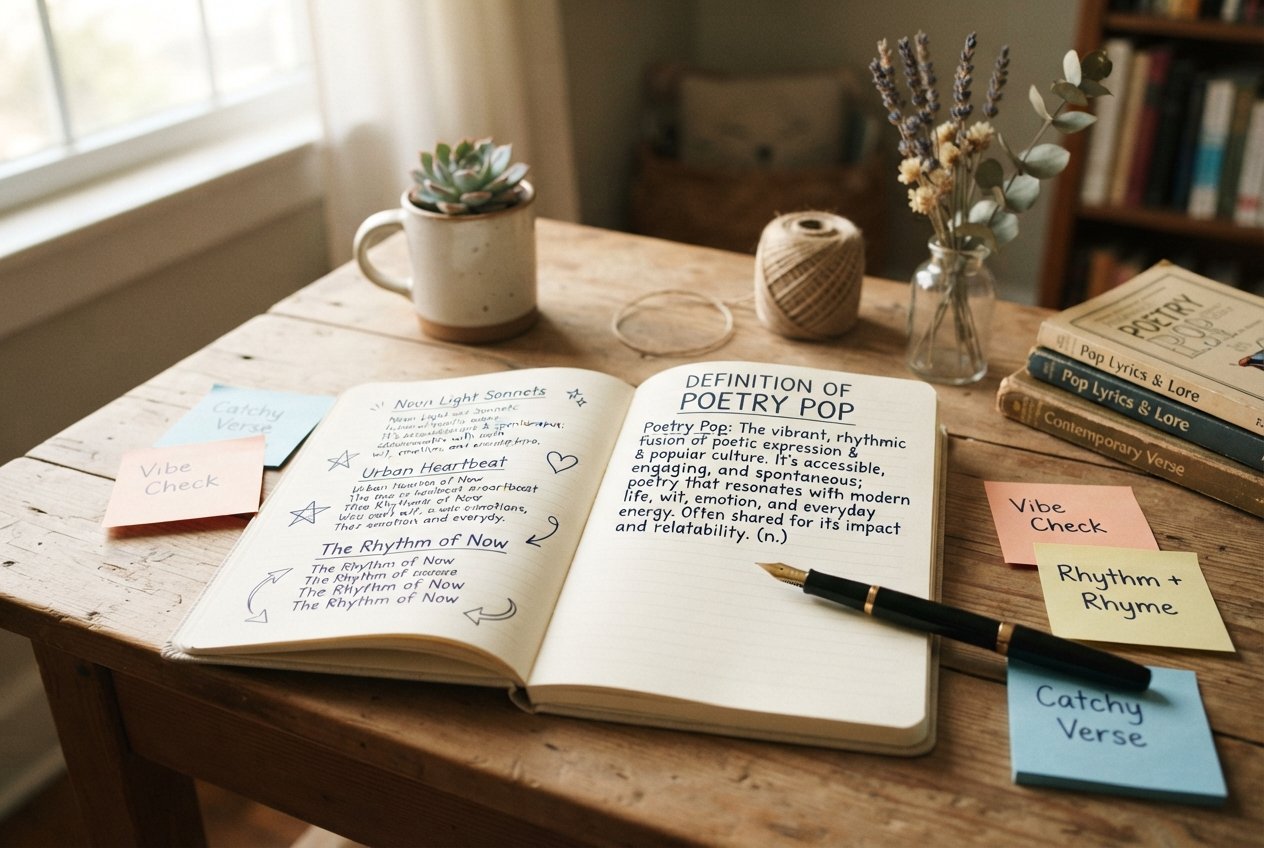
Poetry Pop is a term that could loosely refer to a “fun, accessible, inventive” style of poetry. It doesn’t have a specific form, so it doesn’t have one specific set of rules to follow, and it’s not an established poetic form. Instead, it can be thought of as poetry that is more inviting and more approachable.
Regular poetry may also embrace well-formed formats like sonnets, haiku, limericks, and acrostic poetry. It is usually used to bridge a gap, especially for those new to poetry, to provide d examples of poetic forms (friendly) and freer poetry.
You don’t need to be tough to write tough poetry. A quick haiku about friendship. A few lines about heartbreak. A light-hearted poem about everyday life.
Why Is Poetry Pop Interesting?
Poetry is more fun when you allow yourself to read it without getting bogged down with the rules of poetry. Poetry Pop promotes just that.
1. It Simplifies Poetry for the Student
Others stay away from poetry because they believe it’s too hard, that it needs to use big words and be literate. Some looseness may help novices realize that one can also use common words and everyday thoughts in poetry.
2. It Inspires Creativity
Poetry doesn’t have to be the offspring of a brilliant idea. Often it begins with a single word, photograph, idea, memory, or even a fleeting observation.
3. It Taps Into Common Emotions
Poetry addresses feelings – like love, sadness, hope, despair, loneliness, friendship, thanks. Those are things every reader can relate to.
4. It Presents Various Types of Poems
Encourage your readers not to be intimidated by trying different styles – perhaps a haiku today, an acrostic poem tomorrow, and free verse when they need a little more space.
Different Ways to Enjoy Poetry Pop

Consider some ways to discover a creative and fun take on poetry.
Short and Simple Poems
Poetry can bring many feelings across in a short amount of time. They’re also a good short poem for beginners to practice using language to say an idea.
Original example:
- The evening fades, the stars appear,
- A quiet thought reminds me you’re near.
- Though distant roads may keep us apart,
- Your memory still lives inside my heart.
Poetry Prompts
A poetry prompt is an idea that you have to start with. It might be a word, a question, an image, a situation.
Give these unique prompts a go:
- Write about a place where you felt completely comfortable.
- What is a feeling of the rainfall seen from a window?.
- Write a poem about a friendship that evolved.
- Write four lines about a dream you remember in the morning.
- Explain how you would leave the restroom.
Acrostic Poetry
An acrostic poem is one that has the first letter of each line spell out a word. The first letter of each line often spells out a word vertically down the page.
For example:
HOPE
- Holding on through difficult days,
- Opening our hearts to brighter ways,
- Patience helps us find the light,
- Every dawn brings another sight.
Free Verse Poetry
No meter or rhyme is necessary. In free verse, the lines can be organized by a writer’s choice of movement, emotion, or the natural flow of speech.
This style is helpful when you want to share an experience you’ve had.
Humorous and Light-hearted Poetry
Poetry shouldn’t have to be sad. Funny poetry, humorous rhymes, and writing about everyday things can keep the fun in reading and writing poetry.
How to Write Your Own Poetry Pop Poem

You don’t have to be an experienced poet to get started. Just follow these four easy steps to come up with an original poem.
Step 1: Selecting a Topic
Begin with a topic you are familiar with or passionate about, such as love, friendship, a walk in the park, family, a moment you experienced today, or just a simple moment.
Step 2: Write Down Your Thoughts
Write a few words related to your theme before giving poetic lines. If your theme is rain, you can write: window, clouds, silence, memories, street, and night.
Step 3: Choose a Poetic Style
Choose between a rhyming poem, acrostic, or free verse. Practice all styles so you can find the one that is most comfortable.
STEP 4: Write Your First Sentences
Convert your thinking into brief words or poetic lines. Don’t fret about a well-polished piece of writing for your first draft.
Step 5: Fill it with images and feelings
Describe. Use details to paint a picture that readers can see in their minds. If you are lonely, tell them about an empty chair, a silent house, or a window waiting for the sun.
Step 6: Read and Edit Your Poem
Does each line contribute to the overall mood? Get rid of extra words and clarify confusing lines.
Poetry Pop and the Connection Between Poetry and Music
Poetry and popular music have some common creative tools. Rhythm, repetition, images, rhymes, and personal expression can be used in both to reach an audience.
One lyric could tell a story in a few iconic words, while a poem could evoke the same mood in words on a page. Song lyrics are not the same as page-based poetry. Music carries the song’s music, voice, and sound.
This link demonstrates the potential for poetic expression to take on multiple forms. Writers may be introduced to poetry through their love of song, and then become interested in printed poetry, spoken word poetry, or creative writing.
Advantages of Reading and Writing Poetry
Poetry is a creative activity that is helpful for all generations.
- Author: Writing can assist some people in finding the words to express difficult emotions.
- Creativity: Writing Poems inspires imaginative and original thought.
- Language: Poetry exposes you to new words and new language use.
- Self-reflection: A poem might help someone reflect on memories, experiences,s and their inner thoughts.
- A witty, humorous, or romantic write-up, or a poem that provides you with something to think about, can help make reading a part of your daily routine.
Creative writing is not a substitute for help in the face of emotional difficulty, but it may be one method of processing life’s experiences.
Where Can Beginners Find Poetry Inspiration?
You may be inspired by just about anything. The dialogue you had with someone, an old photo, a walk outside, or a song you know well can spark an idea for a poem.
Alternatively, you could look at some other poetic forms and writing prompts. Poetry Pop is an online poetry blog that features poetry, writing prompts for poetry, and information about poetic forms. This is one way of demonstrating how poetry can be made engaging and accessible.
Poets and writers: Check out some poetry books and other literary websites, critique groups, and groups to try out other writing styles and voices. The more you read, the more you will find to write about.
Conclusion
Poetry Pop is a fun way to connect, be inspired, and appreciate the power of language. It’s a reminder that poetry doesn’t have to be hard, with complex words or rigid rules, to stand on its own. Just a few well-crafted lines can capture a memory, acknowledge a friendship, or paint a picture of a feeling that’s hard to put into words.
From fun short poems to prompts, acrostic poems,s and free verse poems, there is always something new to learn and explore. Write on, keep writing, ng and let your words be a part of what you do with us at Poetry Sad.com.
FAQs
1. Definition of Poetry Pop
Poetry Pop is a lighthearted, flexible, and innovative way to experience and create poetry. It is not one of the conventional, formal poetic structures with set rules.
2. Is Poetry Pop a type of poetry?
It’s not a formally defined poetic form such as a sonnet or haiku. More loosely speaking, the term may be applied to informal poetic exercises, original poems, exercises, prompts, and easy-entry methods for writing poetry.
3. Can beginners write Poetry Pop poems?
Yes. Easy poems are short, can use rhyming or non-rhyming language, and can be written in simpler forms like acrostics or free verse. Use a topic you know about and one single thought or feeling.
4. What differentiates poetry from the lyrics of pop songs?
Poetry is typically composed to be read or spoken; pop lyrics are composed to be sung with a musical accompaniment. Many of the devices and elements characteristic of poetry (such as rhythm, rhyme, metaphor, imagery) are also employed in popular song lyrics.
5. How can I get better at writing poetry?
Read a variety of poems, practice writing poetry, try out different poetic structures, and do not forget to edit and revise your poetry. Use prompts to start new ideas.