Acrostic Poem of Poetry
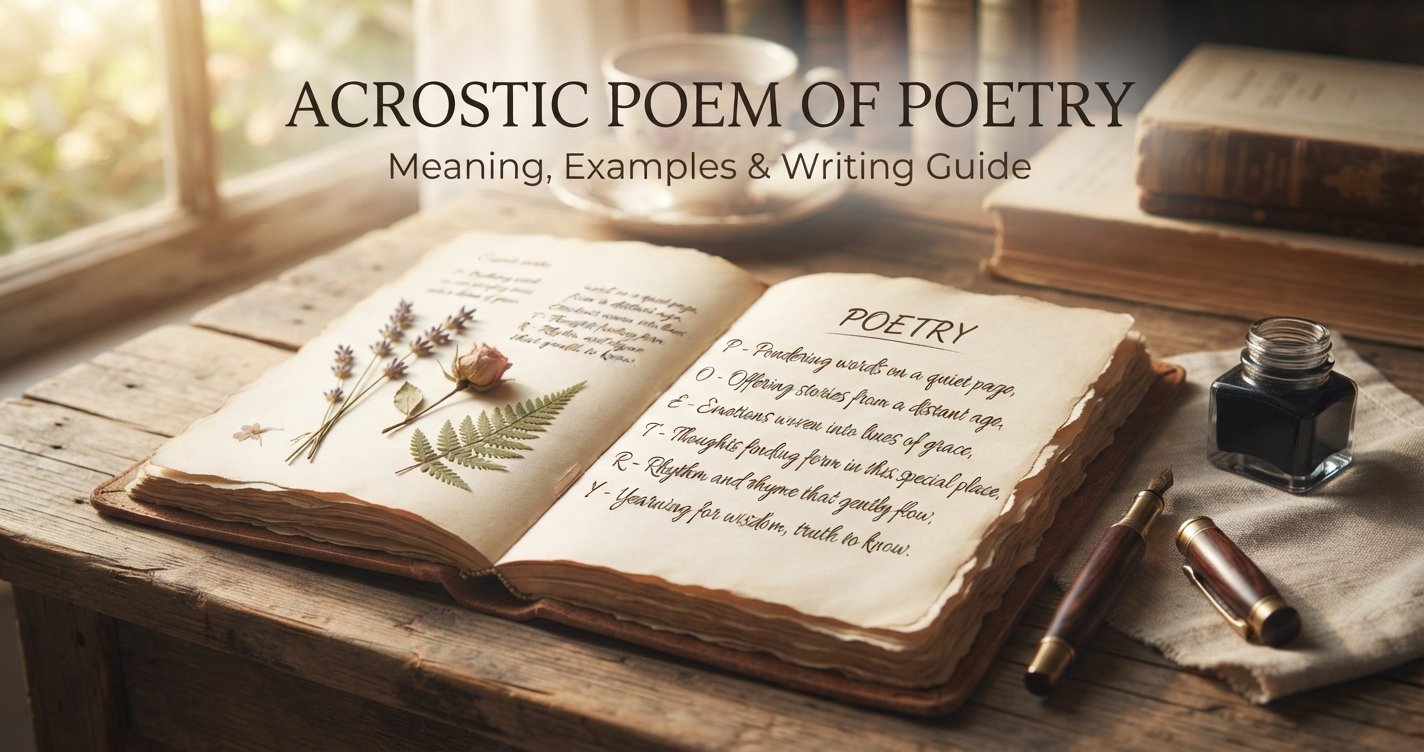
Poetry is a creative format to express memories, dreams, feelings, and ideas. Some poems tell great stories or sound like songs, while others use interesting structures that give words more meaning, such as acrostic poems. An acrostic poem is a poem where the first letter of each line forms a word when read vertically.
With this acrostic, learn a poem by having each line start with the word POETRY. You could describe what poetry is, how it makes you feel to write it, and what words can do.
Poetrysad.com put our purpose into words: Poetry does not have to be complicated, and rules are not always necessary. Just a few words chosen carefully by a poet can set forth emotion that’s impossible to describe any other way. Acrostic poetry is fun for amateur and professional poets.
Definition of an Acrostic Poem
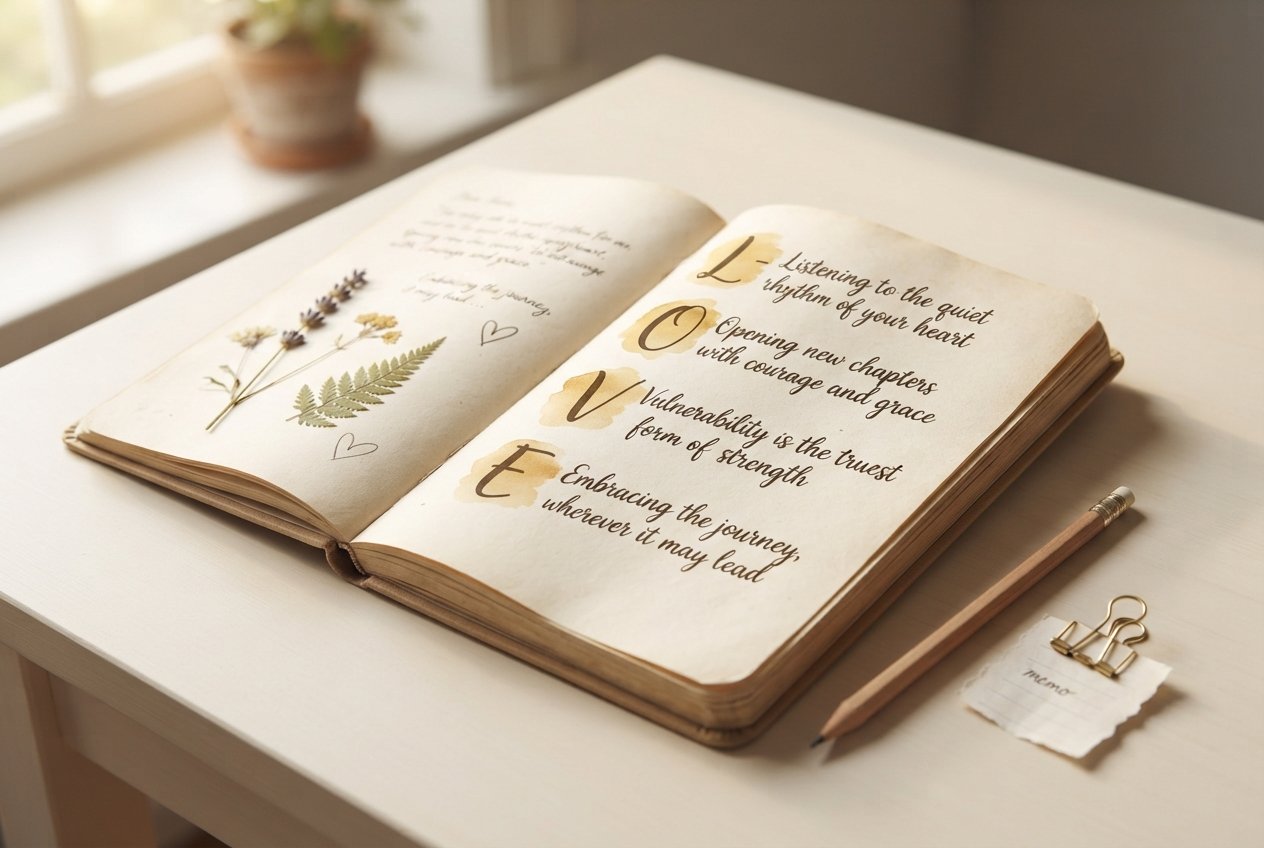
An acrostic poem is a poem in which the first letter of each line spells out a word, name, or phrase when read from top to bottom.
Let’s say you want the word LOVE; you write the word down in the middle of the paper. List out each letter, then write a sentence with the letter you are standing on. For example, LOVE.
LOVE
L – Little moments become beautiful memories.
O – Our hearts recall what words cannot.
V – Voices of love still exist, even in the silence.
E – Every memory is valued.
The letters read down, one above the other, spell out LOVE. Meanwhile, over the top of the lines, it creates this little verse about love.
Poetry Foundation states, “Acrostics don’t need to have rhyme, meter, or any set number of lines, so you can have great creativity when it comes to what you want to write about. This allows the writer to be really creative.
Acrostic Poem of Poetry An Original Example
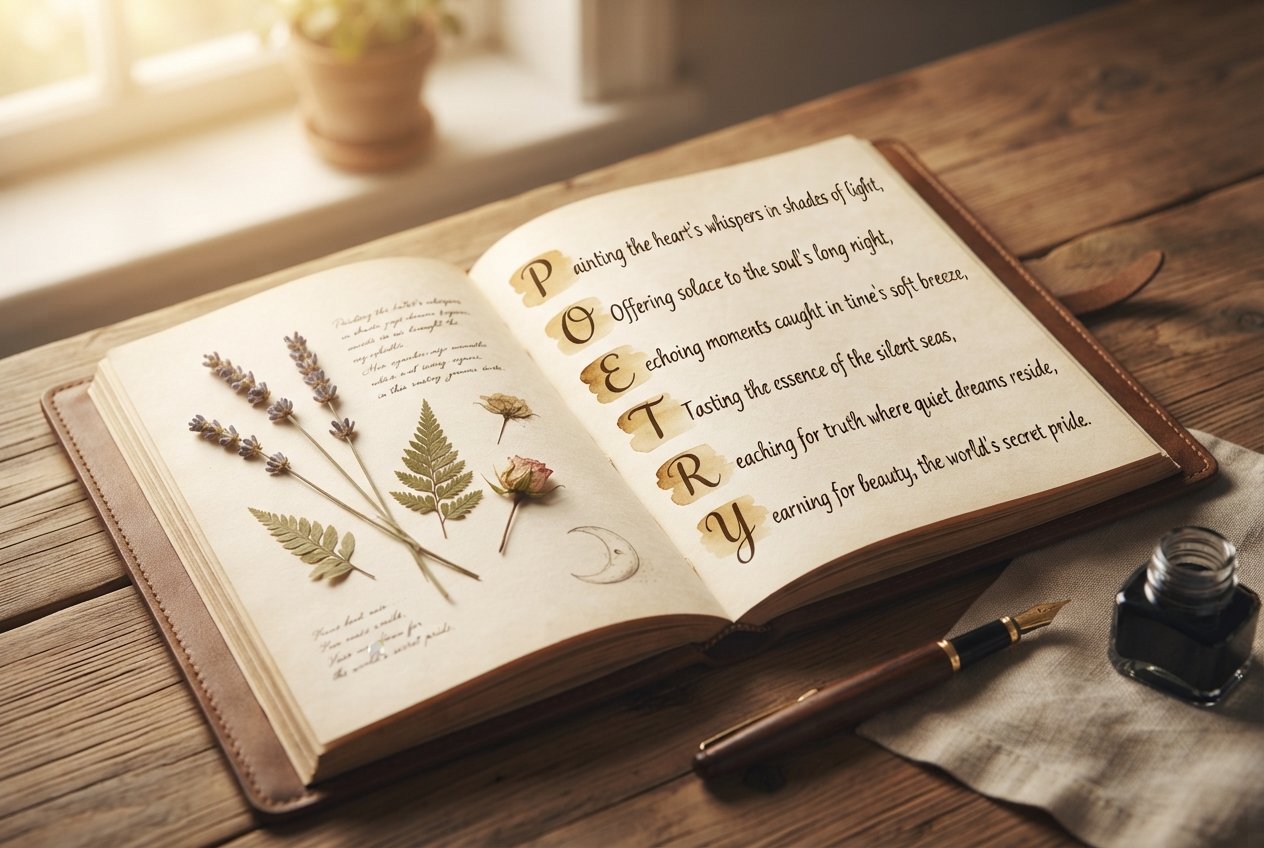
POETRY also lends itself to an acrostic poem. Each letter has a specific role in the creation of the poem.
POETRY
P – Poems allow the voicing of our silent feelings.
O – Our hearts find meaning in each line.
E – Emotions make simple words memorable.
T – Thoughts turn into stories, and those stories wait to be told.
R – Rhythms and words ignite the spark of imagination.
Y – Your emotions live wrapped up in lines of poetry.
With a little thought, this is how POETRY reads as a poem. The composition shows each line rhyming with the next and with a theme of being inspired, emotional, self-expressive,e and creative.
More Original Acrostic Poem Examples
Acrostics can be written about just about anything. Here are some examples you can use as inspiration.
1. LOVE – An Acrostic Poem About Love
L – Like sunbeams in a calm, empty room.
O – Our thoughts flourish when least expected.
V- Very little is required to make a heart feel understood.
E – Every kind word can be remembered forever.
2. HEART – An Acrostic Poem About Emotions
H – Hidden feelings within us are in our smile.
E – Every heartbeat has a story to tell.
A – Sometimes silence can be more powerful than the words you don’t say.
R – Remembering someone can hurt and bring us joy.
T – Time heals the heart.
3. DREAM – An Acrostic Poem About Hope
D – Dreams can start with a small dose of vision.
R – Roads can change, but hope can, will & must stay.
Every fresh day is another day.
A – Ambitions give our lives direction.
M – Moving ahead makes the unimaginable a reality.
4. SADNESS – An Acrostic Poem About Sad Feelings
S – Some tears go unseen.
A still heart can absorb many tales.
D –Days feel longer than they are.
N – Nobody sees all the tears we cry.
E – Even painful memories can teach us something.
S – Slowly, broken feelings start to get better.
S – Somewhere along the way, there’s a little hope.
5. FRIEND – An Acrostic Poem About Friendship
F – Friendship makes ordinary days special.
R – Real friends listen without judging.
I –When hard times come, their kindness is so valuable.
E – Each shared memory is a special gem.
N – Distance cannot ruin a true relationship.
D – Deep friendship makes life brighter.
All of these examples show us how acrostic poetry can speak to romance, sadness, friendship, hope, and all sorts of other feelings.
Different Types of Acrostic Poems
While the principle still applies, writers have a few options when trying out acrostic poetry.
1. Standard Acrostic Poems
The first letters of all the lines in a traditional acrostic create a word or phrase. This secret message is often the subject of the poem.
For instance, NATURE: all starting with N, A, T, U, R, E.
This form is very beginner-friendly.
2. Double Acrostic Poems
A double acrostic contains more than one type of hidden message. For instance, the first letter of each line could spell out a word while the last letter of each line may spell out a different word.
Requires more planning since the writer has to think of the word to begin and the word to end the sentence.
3. Name Acrostic Poetry
Name acrostics have a person’s name as the main word. Starting with each letter of the name, a line is written to describe this person’s qualities, personality, or importance.
These are often for birthdays, celebrations, cards of friendship, and personal notes.
4. Phrase Acrostic Poems
Phrase: Where one short word is not enough, you can use an entire phrase instead. The first letter of each line is then the first letter of each word of the phrase.
This gives writers a little more room to develop a slightly lengthier message.
How to Write an Acrostic Poem Step by Step

Writing an acrostic poem is an easy process. You don’t have to be a professional writer or have intricate poetic rules and knowledge.
Step 1: Select a Word or Subject
Begin by selecting a word that motivates you. This could be an emotion, a person, a place, an experience, or an idea.
There are some common options like:
LOVE
LIFE
DREAM
HOPE
FRIEND
NATURE
POETRY
MEMORIES
Select a word that is broad enough to let you create some interesting lines.
Step 2: Create the Vertical Word
Write each letter on a separate line. This allows the poem to take shape.
For example:
P
O
E
T
R
Y
Now you have six beginning letters for your poem.
Step 3: Imagine Some Ideas for Every Letter
Consider nouns and adjectives for topics before you begin a long paragraph.
For the word POETRY, you might consider:
P – Passion
O – Originality
E – Emotions
T – Thoughts
R – Reflection
Y – Yearning
Utilize these techniques to create lines that will draw your viewer into the subject.
Step 4: Create Meaningful Lines
Use each letter as the first letter of an entire thought. Your lines should relate to the main idea, not be just some random words listed.
For example, if the essay is about memories, each line could relate to a different one you have experienced associated with the past.
Step 5: Read and Improve Your Poem
Read the poem all the way through. See if the lines make a direct thought and if the stem letters spell out the right word.
You can do any of the following: Improve word choice, change part of the rhythm, make the feeling stronger.
And don’t forget, an acrostic poem does not need to rhyme. The best part of the poem is the hidden word from the first letters.
Should an Acrostic Rhyme?
No. An acrostic poem does not have to rhyme.
A distinctive feature of it is the location of the first letter in a game. Writers’ desire to give their writing rhyme because it sounds musical, while there are those who prefer free verse.
Either way is fine. The key is that the poem successfully conveys the message and, if needed, the acrostic is preserved.
Both the Poetry Foundation and the Academy of American Poets list acrostics as one of the more flexible poetic forms in that words are hidden across the initial letters of the lines.
Why Are Acrostic Poems Popular?
Acrostic poems are enjoyed because they are easy to write.
Accessible for novice writers: Writers can begin with a tiny word and piece together the poem one line at a time.
There’s an opportunity to develop a new face or picture with every character.
The subject of a poem might be emotions, memories, and names.
Good for repetition: helps to build up the learner’s knowledge of words, phrases,s and sentences to use for talking and writing.
Anytime you want to use them: Acrostics are great for greeting cards, notes, and emails to friends or loved ones, in the classroom, or in published collections of poetry.
Where Can You Find Inspiration for Acrostic Poetry?
Most places can inspire you. You don’t have to wait for a special time to be inspired to write a poem.
A few ideas:
- Nature: Talk about rain, flowers, mountains, sunset, or the changing seasons.
- Relationships: Explore love, friendship, family, and memories.
- Emotions: Include words like sad, joyful, alone, hopeful, and lonely.
- Everyday experiences: Take a dull morning, a certain place, or a chat with a friend and make a poem of it.
- Personal memories: Base your poem on an important name, date, or personal experience.
- Reading various genres of poetry can also enable you to learn how to use imagery and language in novel ways.
Check out acrostics from the Poetry Foundation and the acrostic writing activity by the University of Arizona’s Poetry Center.
cancaluson
Acrostic poetry shows that creativity doesn’t always have to include complex parts and pages of verses. A simple word could inspire a whole poem to include that life of memories, feelings, and imagination.
No matter which one you go with – LOVE, LIFE, DREAM, or POETRY – every letter offers a new chance to say something from the heart. Choose a word that speaks to you, look into its letters, and make poetry out of your thoughts.
Even the most basic words can form the best-loved of poems.
FAQs
1. What is an acrostic poem of poetry?
An acrostic poem about poetry is made from the different aspects of the word POETRY. The one line for each begins with a letter of POETRY. The different lines talk about being creative, feelings, and your writing.
2. What is a simple example of an acrostic poem?
Take the word LOVE. Write each of its four letters on separate lines and use each of the letters to start a line about something you love, a fond memory, or someone important in your life. Read the first letters of each line down the side, and you will spell LOVE!
3. Can acrostic poems be about sadness?
Have you ever wondered what an Acrostic poem about sadness, heartbreak, loneliness, memories, and other emotional subjects might look like? Well, you can use words like SADNESS, TEAR, S, and HEART as a guide to get you started!
4. What is the ideal number of lines for an acrostic poem?
The number of lines here would normally be based on what word or phrase has been chosen. The ‘LOVE’ poem has four main lines, while the ‘MEMORIES’ poem has eight.
5. Is an acrostic poem necessary to have a title?
A title may not be necessary, but it helps the reader understand the poem. Many authors will use the same word that reads down (or across if it is written horizontally) as the title of the poem.