Ozymandias Poem
Introduction: Ozymandias Poem
Poetry can hold on to memories, feelings, and stories for a lifetime, long after those who create them have passed away. Poems can be the cause of amusement, or they can cause you to think about pride, history, power, and what it means to be human. “Ozymandias,” by Percy Bysshe Shelley, is a poem that offers the reminder that nothing lasts forever in the world.
Poetry Sad.com focuses on poems that have greater meaning and human connection. The poem Ozymandias by Shelley is a very powerful reminder of how almost everything will eventually fade with time.
Sonnet 21 is about a broken statue deep in a lonely desert. The statue was once the embodiment of a mighty Egyptian ruler, but now all that remains is a broken lump of stone. Shelley uses the simple image of a beaten-up statue to illustrate the fleeting nature of political power, the perils of pride, and the relentless march of time.
Whether you are hearing this timeless poem for the first time or searching for a closer read, this guide offers insight into its meaning, history, literary devices,s and relevance.
Who Wrote the Ozymandias Poem?
Ozymandias poem was written by Percy ByssheShelley,s an English Romantic poet who was born in 1792. He was an impressionist, political thinker, and a critic of authoritarian power.
Poetry may serve as a means to inspire new thought and defy norms, and Shelley’s writings often reference themes of justice and freedom. The interaction between nature and individuals and the influence of government and corporate authority are common motifs in his writings.
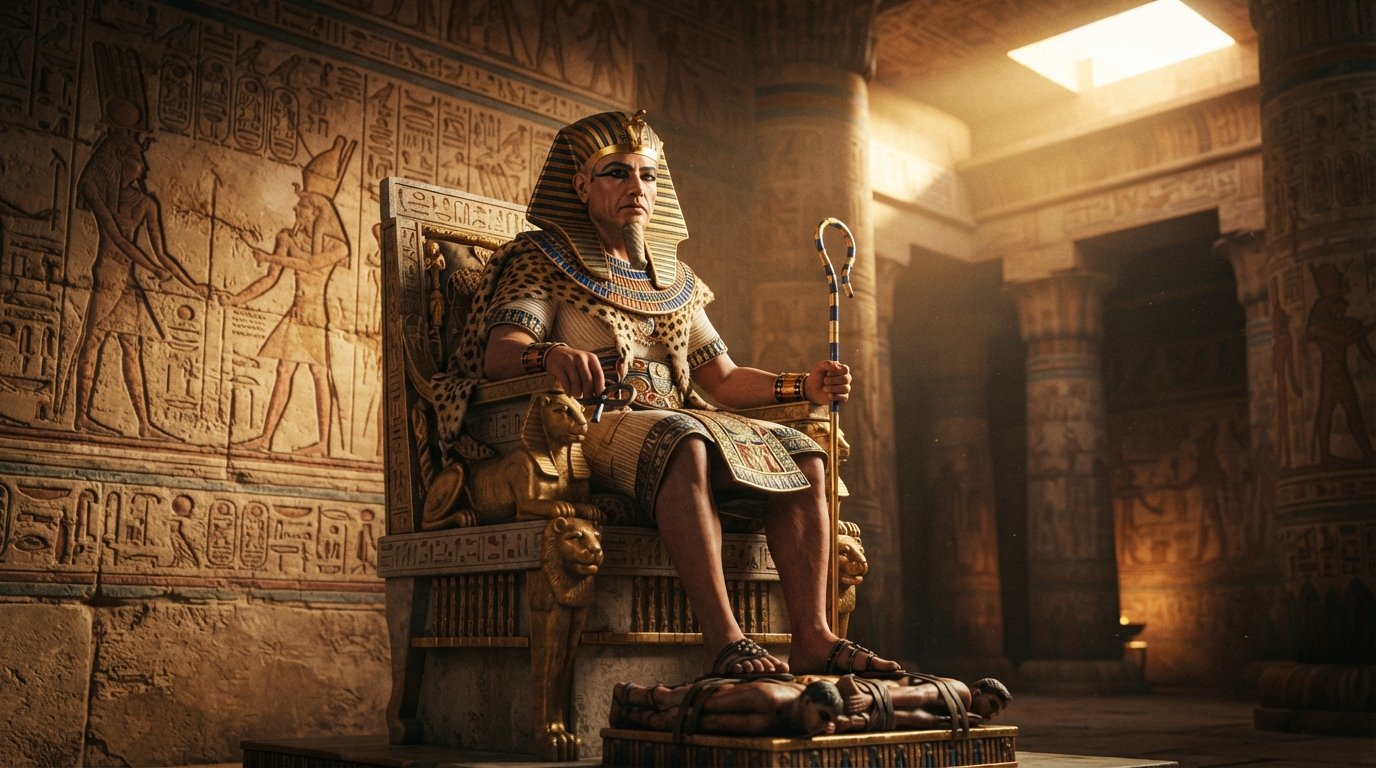
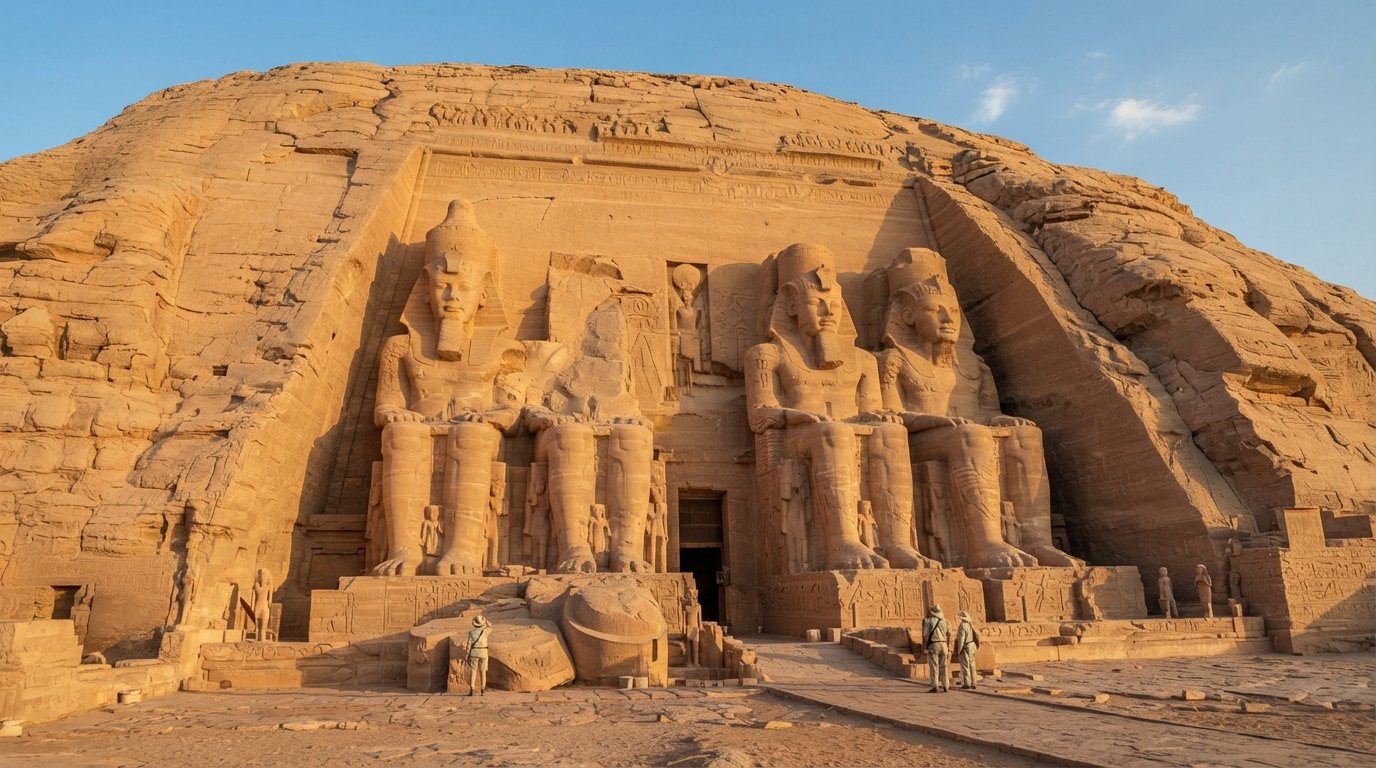
The name Ozymandias is actually that of Ramesses II, one of the most ancient and powerful of the pharaohs. His huge statues and monuments were all designed to show off his power and to ensure that the world remembered him.
Shelley drew on this historical inspiration as the basis for a fictional meeting with the remains of a ruler who has once been a proud monarch. Instead of displaying the grandeur of a magnificent kingdom, it presents a broken statue lying in an infinite desert.
The main theme of this poem is the king’s difference between power and might versus his lost empire.
Ozymandias Poem Summary
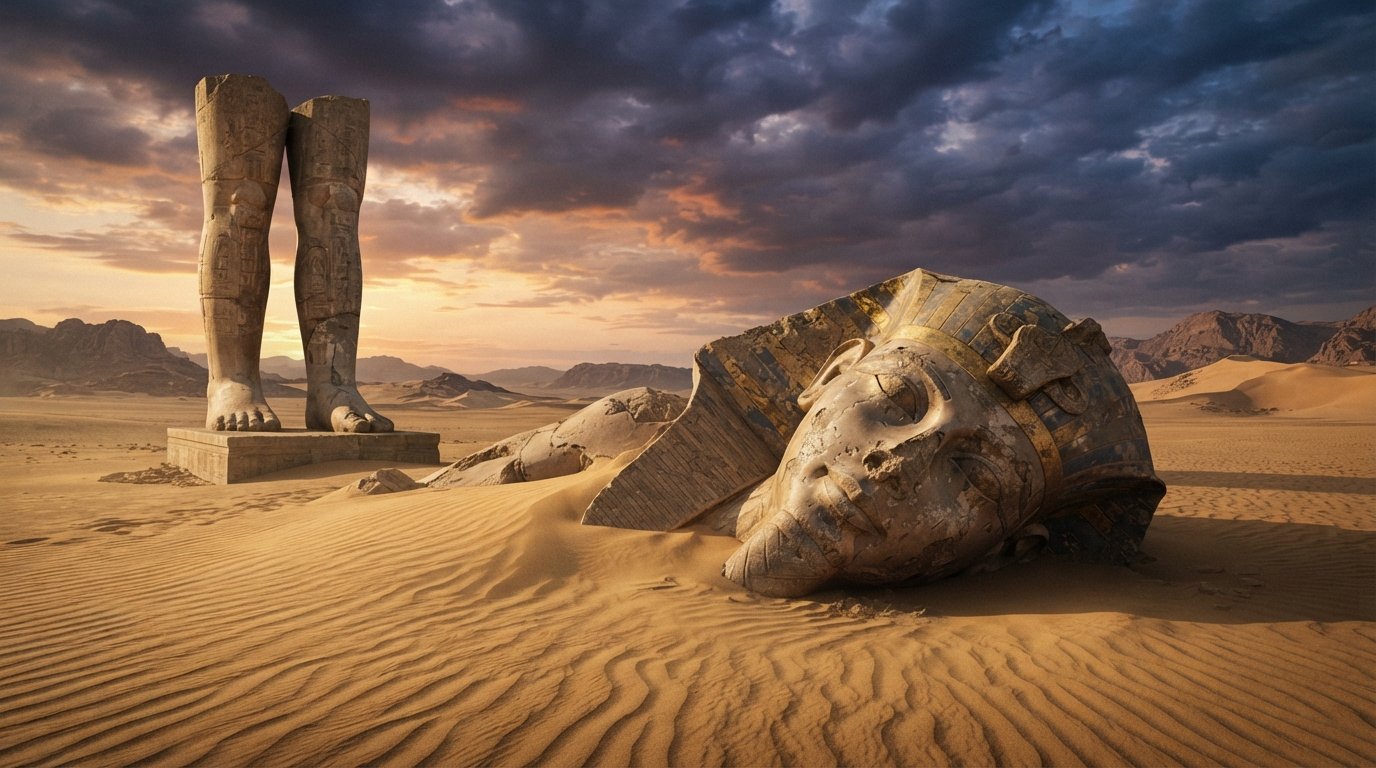
The poem opens with a speaker narrating a meeting with the traveller who has been to a far-off ancient land. During their chat, the traveller narrates about the remains of a big statue that was in the desert.
However, two large stone legs are all that are left standing. A broken face has become buried in the sand beside the statue. Despite the damage, this expression still reveals the character of the ruler.
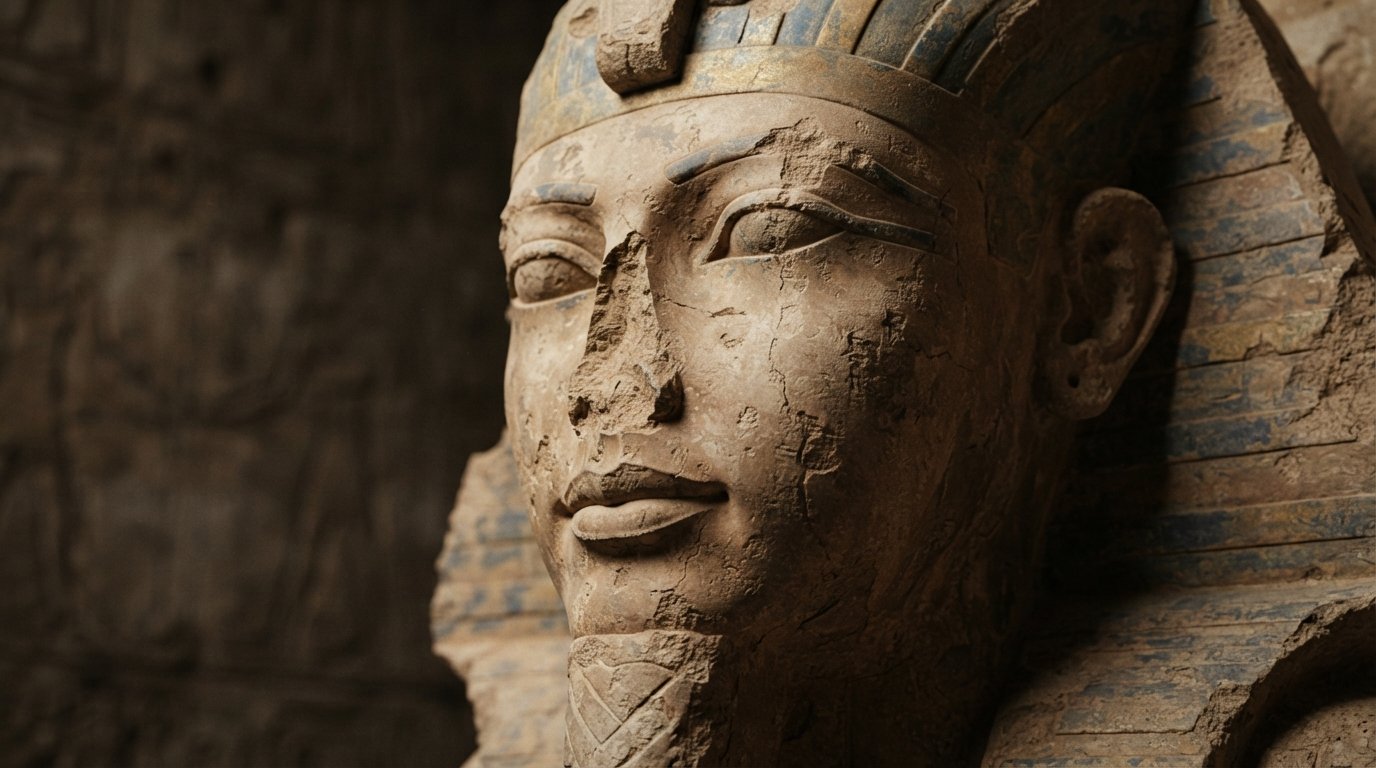
The face. This is the face of someone prideful, arrogant, and deserving of their superiority. The sculptor had a good knowledge of the king’s character and was able to caricature his expressions in stone.
The next thing that the traveller describes is a pedestal on which the statue is situated. An inscription on it reads that Ozymandias was a great king and other conquerors should beware of his greatness.
But here is the cruel irony: his entire glorious kingdom is no longer there.
No striking edifices, no armies, no monuments; there is an immense empty desert.
The traveller’s account of the king tells a simple but important truth: the king was sure he would rule forever; in the end, time swept everything away.
What Is the Meaning of the Ozymandias Poem?
The moral of Ozymandias is that the greatness and wealth of mankind are temporary.
We all think we will be memorable because of what we accomplish. Presidents make monuments, emperors raise empires, and dictators try to shape history. But no one can stand against the unstoppable momentum of Shelley’s push toward the future.
Ozymandias thought his works were too great for anyone in another age to compare themselves with.
Yet the reality is completely different.
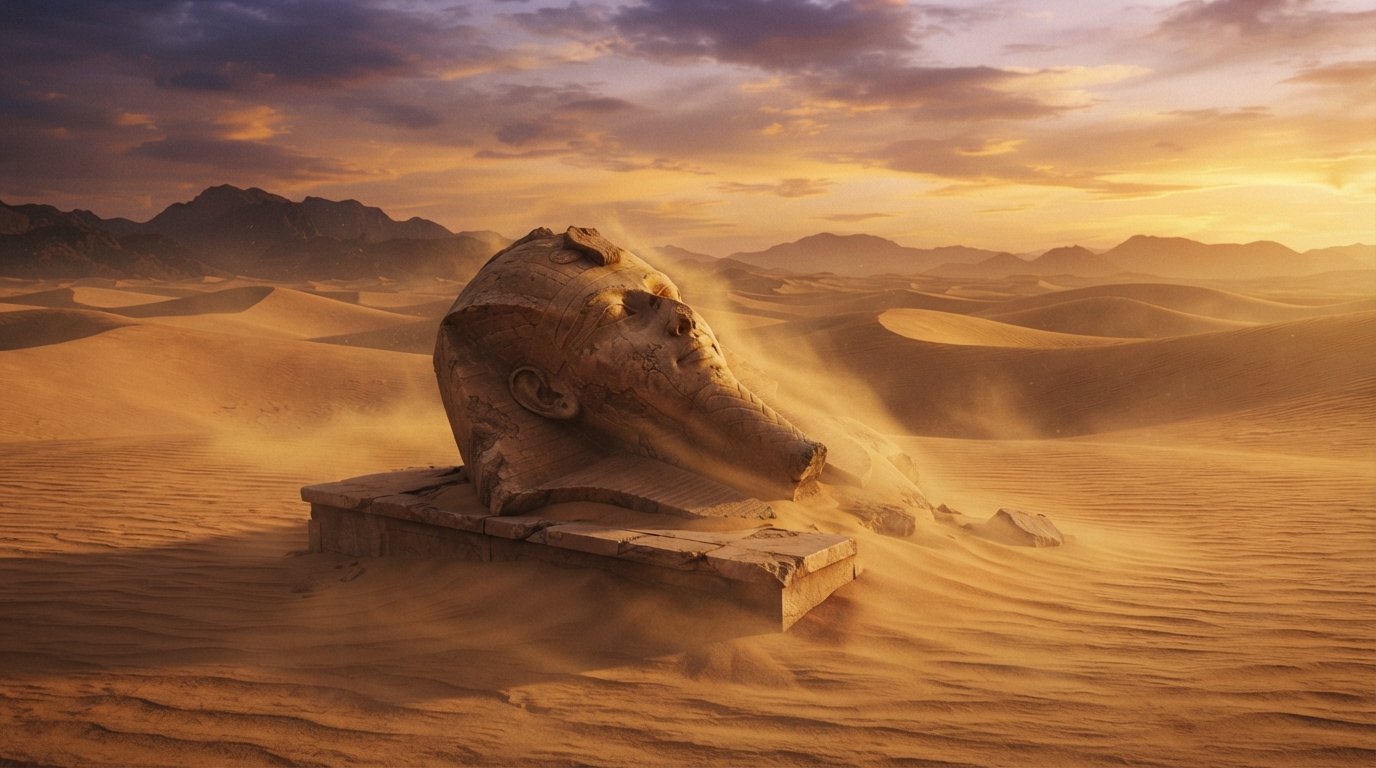
His kingdom has vanished. His statue has tumbled. The sands of the desert have replaced his territory. The only thing left as evidence of his majesty is the broken sculpture and a sentence wherein he once bragged of his greatness.
The poem makes us reflect on what makes a person significant. Is it money, power, renown, or the lasting service a person renders to others?
“Power, free from humility, cannot ensure a legacy that will endure,” he remarks.
Major Themes in Ozymandias
1. The Temporary Nature of Power
One of the most dominant themes in the poem ” Ozymandias ” is the ephemerality of political and personal power.
The king’s kingdom was once very large, and he thought that he would always be in charge, but it was gone.
His destroyed statue shows that the mightiest cannot beat time.
This subject is still relevant. Politicians, movie stars, rich people, and powerful companies may be revered to the extreme, but they can fall from grace.
No one can achieve greatness simply by having lots of power.
2. Arrogance and Pride
Ozymandias is proud and thinks he is better than everyone else because he is great.
The lines on his face, sculpted as the damaged statue, say a lot about his feelings of command and contempt.
The upper part of the pedestal bears his arrogance. All other rulers around the world must envy him and feel tiny next to him.
But the ruins around it speak to the insecurity of his confidence.
At this stage, Shelley feels thathis contrastst hints at how pride can sometimes produce an appearance of interminable victory.
3. Time and the Destruction of Human Achievements
Time is like an invisible character in the poem.
It does not tell stories or fight wars. It does not call out. However, its presence can be felt in the broken temple and the deserted island.
Nature reminds us that even the king’s monuments could not stand the test of time.
Nature is the desert that is constantly reminding us of the fact that everything made by human beings is destined to vanish.
This theme challenges the reader to value what we have now – to presume that success and happiness will be experienced in the same measure – forever!
4. The Impact of Art and Memory
Although the king’s empire is no longer here, the sculptor’s display of his work reveals something about him.
It maintains the defiant face of a ruler who had once thought himself indestructible.
And of course, it is not only the poem. It also preserves the story of Ozymandias.
This contrast is one of the points to remember: his political power is gone. His artistic power remains.
Even if the world may change, art, music, writing, and poetry have the potential to hold onto the memories.
5. Nature Versus Human Ambition
The barren desert where the statue stands is the triumph of time over man.
Ozymandias sought to attain this immortality via giant monuments. Yet the landscape eventually proved to be greater in power than Ozymandias’s immortality.
The endless sand makes the broken statue look small.
Today Shelley warns of the impossible dream of all mankind- the illusion that they can control the power of nature and the inevitable sands of time.
Ozymandias Literary Devices
Shelley employs a range of literary devices to render the poem significant and memorable.
Imagery: Broken stone legs, the face,e and the sand of the desert all evoke images of destruction and loneliness.
- Irony: The proud king’s inscription details his accomplishments, while at his feet he can clearly see that his kingdom has totally vanished.
- Symbolism: The broken statue stands for power and control, and the desert represents time, nature, and human achievements fading away.
- Alliteration: The repetition of consonant sounds helps to develop rhythm in the poem and highlights especially effective descriptions.
- Personification: The way the sculptor has depicted the feelings of the king gives the damaged statue life.Contrast: The king’s assured words set the ruined landscape in stark contrast.
All three methods engage a human being in an analysis of a merely obvious statement about a thing long past.
Structure, Rhyme Scheme, and Form
Ozymandias is a sonnet and, as such, it is 14 lines long.
Its typical iambic pentameter can be broken down as five pairings of unstressed and stressed syllables per line.
Yet, the rhyme scheme Shelley uses is not totally straightforward.
Its rhyming pattern is usually denoted as:
ABABACDCEDEFEF
Furthermore, the poem also introduces a significant structural shift.
The first part is the traveler’s description of the statue; the second is an image of the inscription followed by the image of the empty landscape.
This movement shows the reader the distance between the king’s imagined greatness and the truth of his destruction.
What makes the unusual mixing of these sonnet forms interesting is that it creates a unique poem that drives home its point.
Where Ozymandias Came From
The poet was Ramesses I, also called Ramesses the Great.
During his reign over ancient Egypt for many years, he became well known for his military campaigns, his royal building projects, and the colossal monuments built in his honor.
This period in Egyptian history, under his rule, was marked by impressive constructions of temples and statues to honor his rule.
Ozymandias is derived from the Greek form of Ramesses II.
She used that historical personality to write a literary comment about the provisionality of political prosperity.
Instead of providing a direct historical account, he visualised a traveller stumbling upon the king’s statue in a deserted country.
The outcome is a poem that links the old to the new and raises essential questions about pride, power, and the flow of time.
Why Is Ozymandias Still Relevant Today?
Even if it was created a couple of hundred years ago…
We still put wealth, fame, political power, and the public eye on a pedestal. We devote lifetimes to developing careers, companies, reputation, and personal history.
But it does not always mean you have succeeded forever.
A renowned person can fall into obscurity. A mighty empire can fade away, and such all-glittering structures can turn into ruins.
When you read Ozymandias, it makes you think about why you shouldn’t trust people based on superficial qualities and what is left behind after power.
The raising of other questions. Also, it asks: what should we be trying to leave for future generations?
Maybe the greatest accomplishment we make, however, isn’t any of the monuments, the authority we achieve, the gold we acquire, any of that. It can be the kindness, the creativity, and the influences the rest of us have on the rest of the world.
Ozymandias and Modern Spoken-Word Poetry
The Poetry Society has pointed out an intriguing link between this historical poem by Shelley and present-day spoken word.
The Poetry Society runs a Page Fright educational project that examines how contemporary artists reference and engage with traditional poetry.
Celebrate, Dizzy’s entry, is a response to Ozymandias by Shelley, set in a dystopia where we have no more school, city centre, town hall, or plumbing.
The link demonstrates how the ideas expressed in Shelley’s poem can be used to stimulate contemporary creative writing.
Both draw on the theme of the loss of the familiar and the transience of human endeavors.
It also shows how classical poetry still inspires contemporary music, rap, and spoken-word.
What can the readers learn from Ozymandias?
There are some lessons that the poem can teach us about everyday life.
First, success must not lead people to think that they are better than anyone else. Pride will alienate individuals from the people in their lives.
Second, being well-off or famous does not bring ongoing happiness or meaning.
Third, how we behave towards others might leave a richer legacy than the amount of money or power accumulated.
Lastly, it keeps us grounded. Life is always in flux, a nd no one will always be in power.
Ozymandias is more than a story about an ancient king. It is the story about everyone who thinks that their victory is eternal.
Conclusion
Percy Bysshe Shelley’s ” Ozymandias ” has remained a strong poem reflecting pride, power, ambition, and the tempo of time.
Using the image of a shattered statue in an empty desert, Shelley shows how no matter how powerful a ruler seems, time destroys them all. The proud inscription on the king is, in fact, a reminder of mankind’s inevitable setback.
But perhaps there is something beautiful in the poem too. Despite the downfall of Ozymandias’s kingdom, his story is inspiring still.
Maybe that is the most important thing we’ve learned: That power can fade, money can vanish, and places will crumble, but valuable ideas can live forever in art and poetry.
Poetry at Poetry Sad.com allows the reader to find the poet’s words and realize the true meaning behind some everyday occurrences. Shelley inspires us to remember how humility, imagination, and contributions we make to other people’s lives are more important than momentary greatness.
FAQs
1. Who penned the Ozymandias poem?
Ozymandias was composed by Shelley in 1817 and published the following year in 1818. It is one of Percy Bysshe Shelley’s most celebrated sonnets.
2. What is the main message of Ozymandias?
The key point is that all of our efforts, splendor, pride, possessions, and prestige in the end will not last. Even the greatest king of earth down the road will be no more.
3. Was Ozymandias a real king?
Ozymandias is a reference to Ramesses II, also known as Ramesses the Great, who was an ancient Egyptian pharaoh and one of the most powerful.
4. What does the statue of Ozymandias represent?
The statue, which is now shattered, is the epitome of the end of humanity’s might, as well as the fleeting nature of victories on the world stage. It is also the sign that not a single ruler can last forever.
5. What is the form of Ozymandias?
Ozymandias is a 14-line sonnet that mixes the Petrarchan sonnet form and the Shakespearean sonnet form. Ozymandias is written in iambic pentameter with an unfamiliar rhyme scheme.