Introduction: How to Write Poetry
Poems most likely won’t start on a plan. They start as that one feeling that won’t let you go: that phone call you missed, that song stuck on repeat in the store, that empty seat at the dinner table. If you’ve ever felt that, and wondered what to do with it, you’re more than halfway there to writing poetry.
This book walks you through writing poetry one step at a time, while you experience authentic emotions. No specific vocabulary, no rhyme dictionary, no teacher required. Just ten minutes of time and a pen.
Step 1: Read a few poems first
Read before you write. Not to study, only to listen. Notice how brief a poem can be, how simple the words are, and how much goes unsaid.
A good place to start our poems page.
Try a few from a variety of moods like Sad Poetry or Midnight Solitude, and pay attention to what lines stay in your head an hour later; those lines are quietly doing their work.
Step 2: Choose a Feeling and a Small Moment
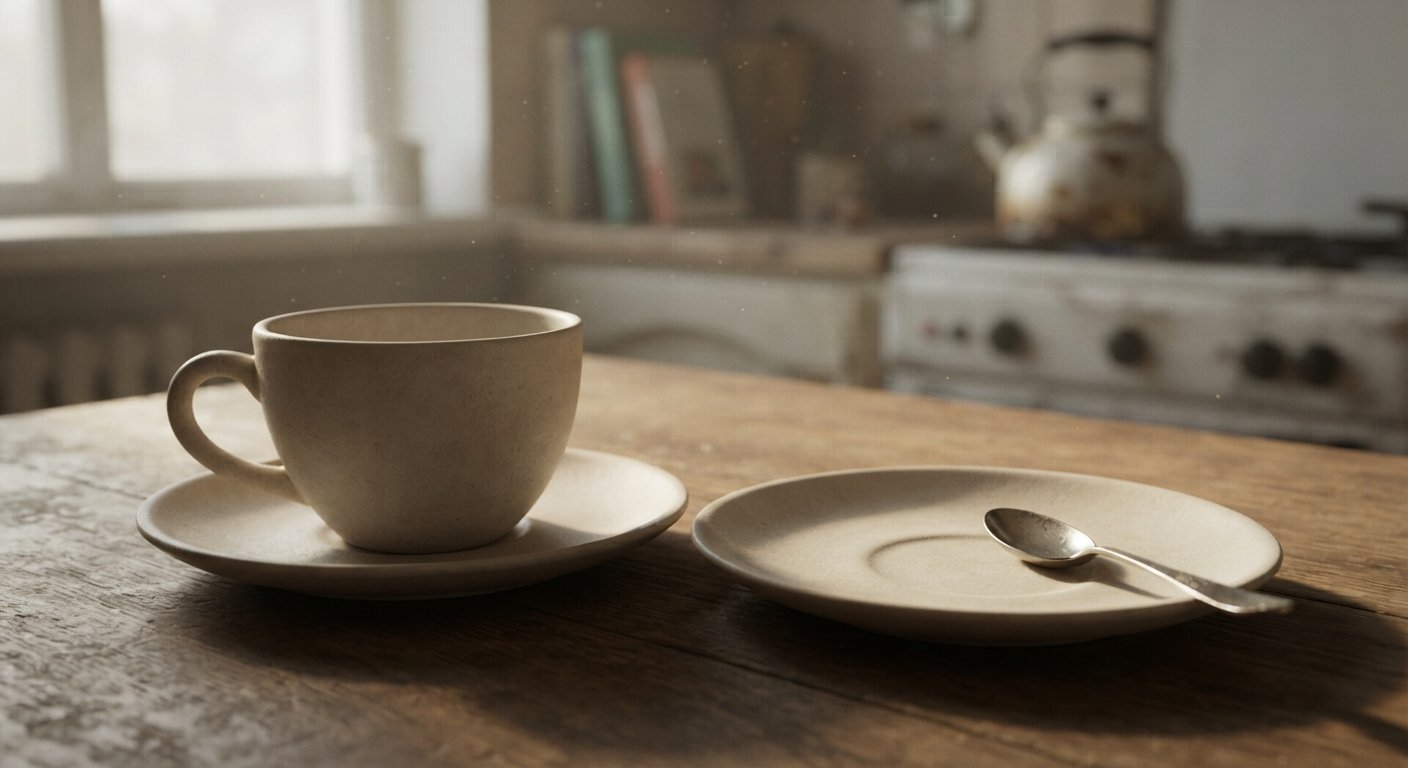
Bigger subjects blur poems. “Grief” is too big to see. “My grandmother’s reading glasses on the kitchen windowsill” can be seen.
Select one feeling, like missing someone, loneliness, or hope,e and connect it to a single moment or object. If you get stuck, complete the phrase I feel ______ when I see ______.
Step 3: Write messily for five minutes
Set a timer. Jot down about that time using uncentered sentences, and without pausing or editing. Forget about lines, rhyme, or spelling. You are only gathering material.
The line is probably right in the middle of the chaos, buried under a detail you might have forgotten to include.
Step 4: Show the feeling; do not name the feeling
This is the major way in which a diary is different from a poem. A diary tells us how you feel. A poem has to make us feel it by using something we can see, smell, hear, or touch.
- The porch light is on for no one, and the moths still come.
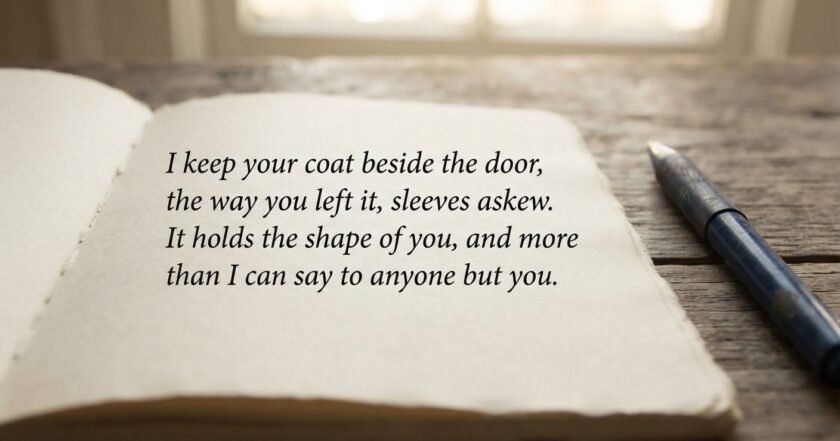
- For example, rather than “I miss you”: I drew two cups, then returned one.
The second of those copies says less. But they are more painful. That’s the joke.
Step 5: Choose a simple shape
You don’t need to use a form. A lot of gorgeous poetry has no form at all – it’s free verse. If you do want something to hold onto, you might write in short sections of lines called stanzas: a pair of lines is a couplet, a group of three lines is a tercet, four lines make a quatrain. Our explanation of what a stanza is in poetry shows each one, with examples.
Step 6: Split your lines at the point of your breath
Line break = tiny breath. End your line on a word you’d like your reader to “hear,” then allow the next line to go a step further and “answer” it. Stanza break = longer breath, like you’re about to fill the poem in.
Read the poem out loud and pause at natural breakpoints in your voice. That’s your line break.
Step 7: Listen to the sound
No rhyme necessary. Forced rhyme is the fastest way to make a sad poem silly. If you want music without rhyme, do repetition, use some short and some long words, then add some soft sounds like m, l, and s. Lightly sprinkle some alliteration over your words, like salt.
Step 8: Edit with a lighter hand
This is where a draft becomes a poem. Do these four checks:
- Remove the opening and closing lines. They usually only have filler. Test if the poem reads better without them.
- Don’t use fancy words. Use real objects. Switch going away from family and friends, not having any fun, feeling lonely and hated for a big kettle, a locked door, or a coat on the hook.
- Feel free to delete a line telling the reader what to feel.
- Take a day’s break, then read it aloud once more. You will notice the rumbler immediately.
A 10-minute exercise to try right now
1. Choose an object in the room that connects to someone or something.
2. Write for five minutes about that object with absolutely no rules.
3. Underline your three biggest touch/smell/touch images (what you see or can directly experience).
4. Write them as a poem of 6 to 10 lines, in which each image or phrase appears on a separate line.
5. Say it out loud and cut whatever clarifies.
Here’s a quick poem I wrote using these exact steps:
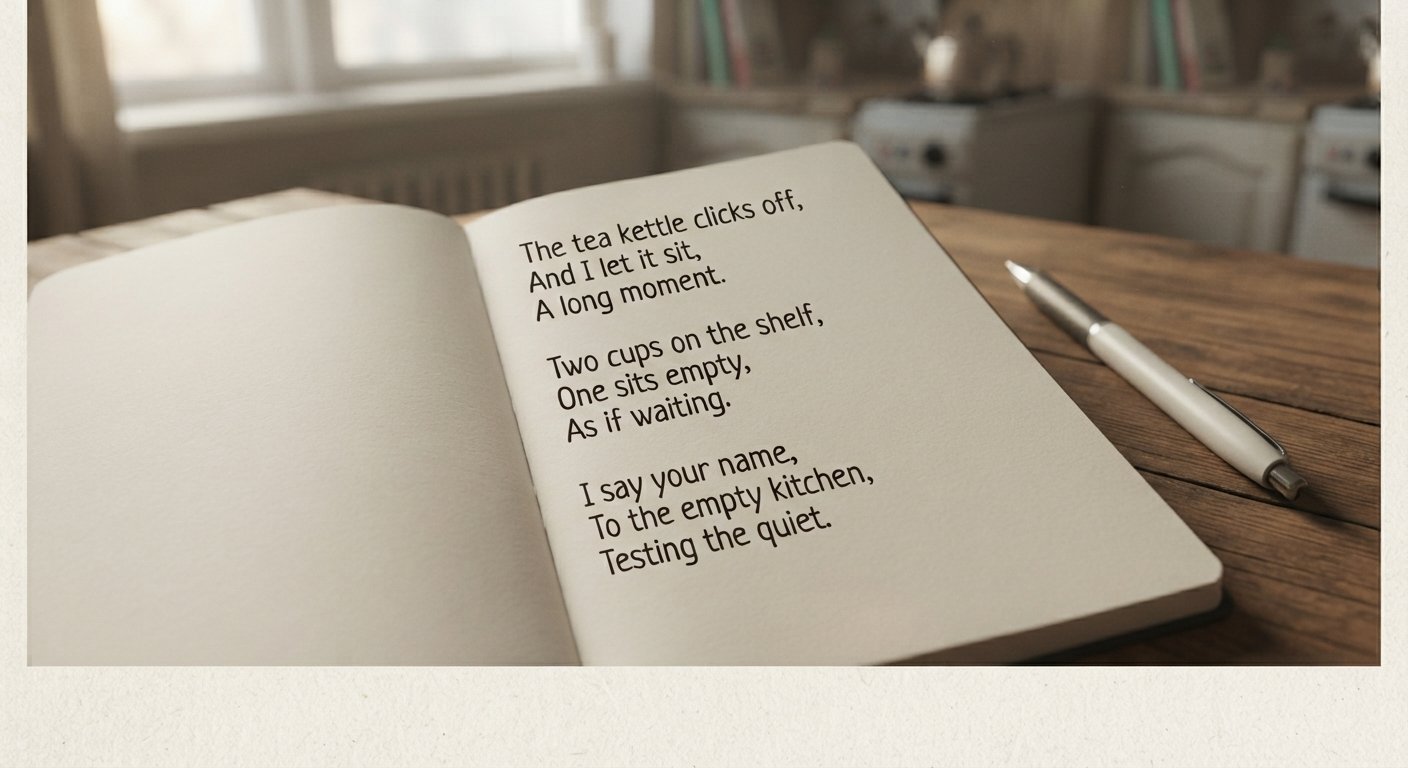
Kettle
The kettle is off, and I get to sit.
Two cups on the shelf, one is never used.
I say your name to the vacant kitchen.
The way you test a floorboard,
gently, in case it still holds.
Did you notice the poem never says “I miss you.” The kettle, the second cup and the floorboard do it for me.
Common beginner mistakes
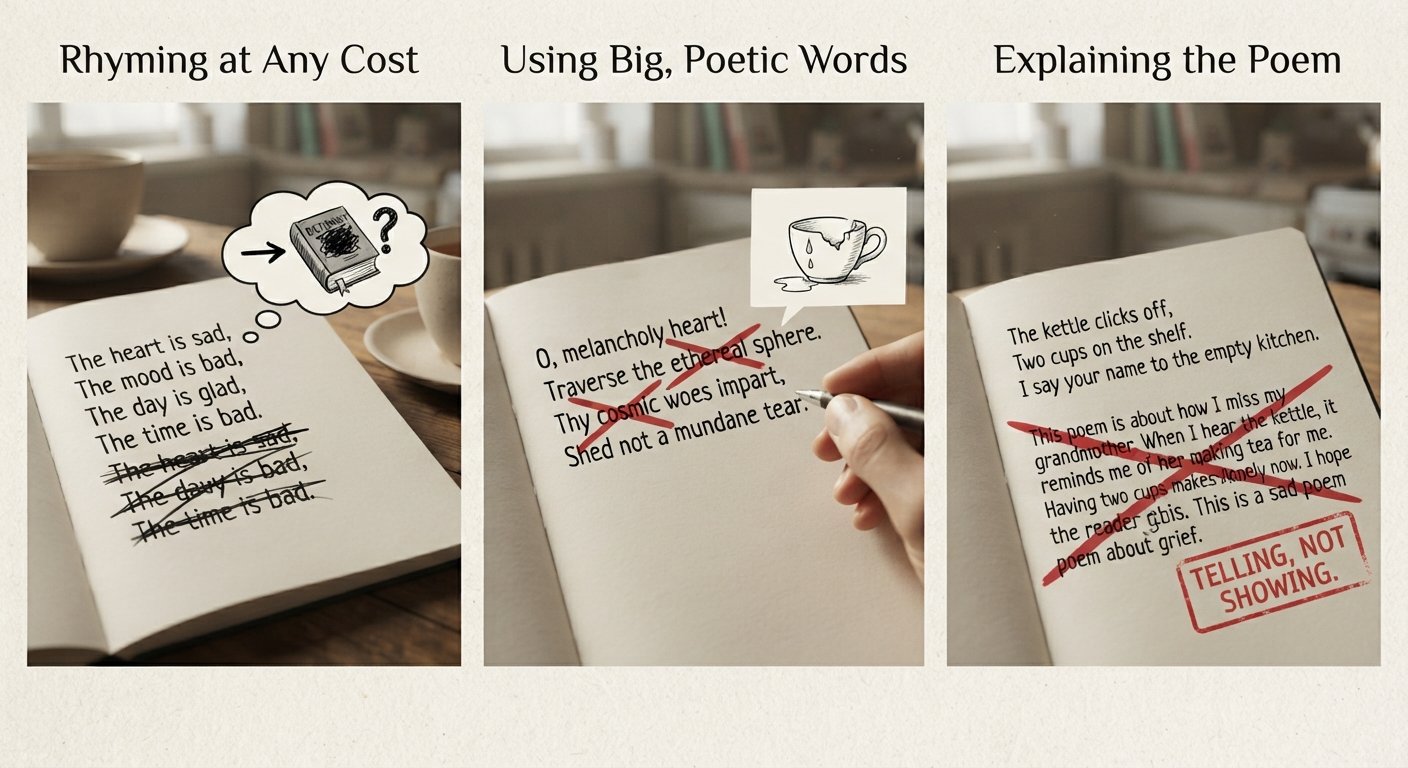
- Rhyme at Any Cost. If forcing a rhyme results in an awkward word, sacrifice the rhyme.
- Pretentious words. Silly words. Words that sound important will always be less effective than simple words.
- Devouring the poem in the poem. Trust the reader.
- You feel read. No one is ready. Just write the bad draft first.
- Compare your earliest poems to well-known ones. Compare today’s poem to yesterday’s, and nothing else.
Where to share your poem
When you have a poem you are proud of, send it to us on our Submit Your Poetry page. You keep full rights to your work, and we always credit your name. If you want to see the kind of poems readers love, read The Words I Never Said or Letters to Yesterday.
FAQ
Is it necessary for poems to rhyme?
No. Many modern poems do not rhyme at all. Rhyme is one tool among many, and it works best when it feels natural.
What is the length of a poem?
As long as it has to be. Most powerful poems can be only 8 – 20 lines. A short poem that matters more than a long, padded poem.
Is it possible to compose poetry even if I have never done it before?
Yes. Begin with one small moment and even ten minutes. You get skill through writing all the time.
How do I know my poem is good?
Ask three questions: Does it sound right? Does one image stay with me? Does it seem true? If the answer to all three is yes, it works.
Poetry isn’t about perfection.
It’s about sharing one real thing in a way that will make someone else feel a little less alone. Whatever small thing you choose tonight, start with that. When you’re ready for more, keep reading through our poems.